
On this page, we bring together a selection of textile projects developed across different fields, where weaving becomes part of proposals for fashion, product, interior design and contemporary craftsmanship.
Each project has required a different approach: from the development of structures and prototypes to the production of finished pieces, small series, meterage or textile samples.
They all share a common thread: technical knowledge, careful execution and a dialogue between the idea, the material and its final use.
In this section, we bring together several projects developed with fashion brands, where the textile enters into dialogue with the form, use and identity of each proposal.
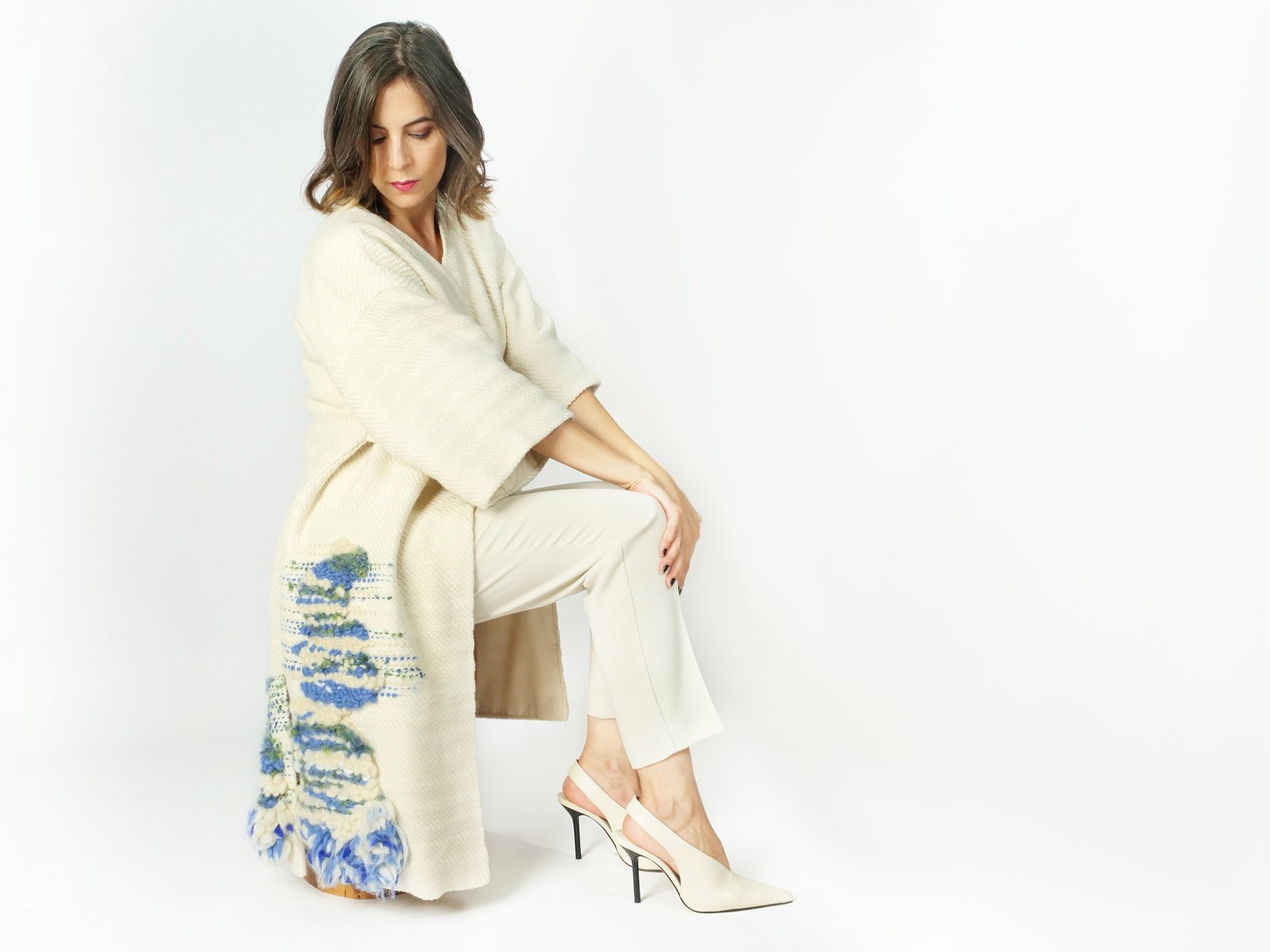
The Emerge kimono is a unique contemporary design piece developed with Olivia Aranda, creator of Olia Kimonos, within Craft in Progress, the pioneering project promoted by the Provincial Council of Jaén and recognised with a National Craft Award.
Designed jointly, it draws inspiration from the olive-grove landscape of Jaén and the Guadalquivir River. We sought to represent how the lush inland landscape, with its blues and greens, breaks into the regular hills of the Jaén olive groves.
For the textile design, we used complex low-warp structures to convey the undulating rhythm of the symmetrical olive-grove landscape, together with different high-warp techniques to represent the water and vegetation of the Guadalquivir River.
Woven in merino wool, bamboo and other natural fibres, the Emerge kimono is a unique composition that brings together fashion development, art and craftsmanship in a single piece.
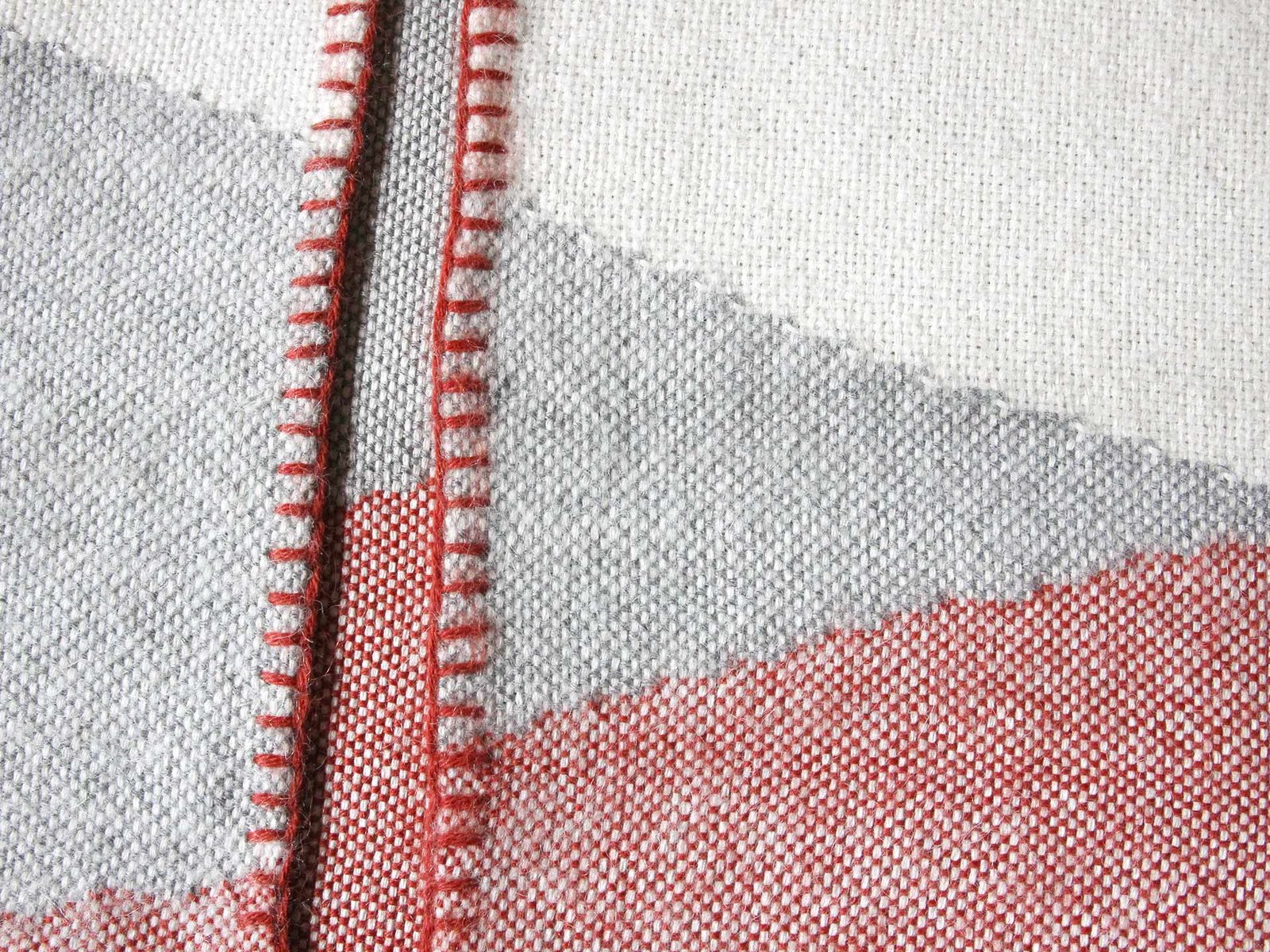
We developed this unique enveloping poncho with menswear designer Manuel García Madrid for his contemporary tailoring brand. It formed part of his AW21 autumn-winter collection, presented at Mercedes-Benz Fashion Week Madrid.
The project began with the idea of transferring the designer’s personal interpretation into the textile itself: translating the rolling olive-grove landscape of Jaén into fabric, as though working on a blank canvas.
We selected the most suitable technique for this singular piece and decided to shape it directly on the loom, combining high- and low-warp techniques to draw the hills of the designer’s native landscape. Natural alpaca in different shades gave the textile the movement and drape we were seeking.
The piece brings together textile design, contemporary language and mastery of craft, where idea, material and form combine to convey the memory and presence of a landscape. García Madrid Poncho
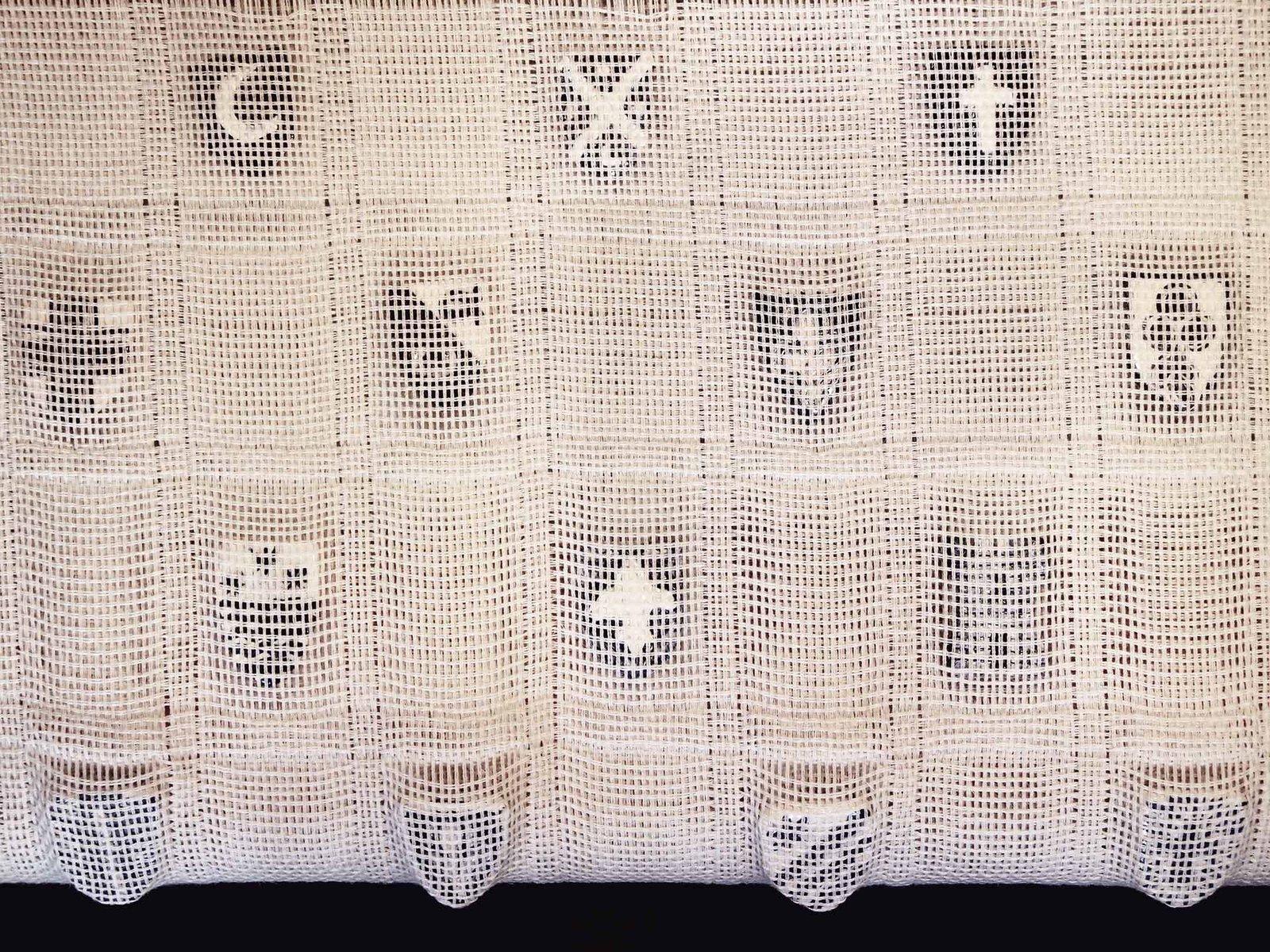
This textile was developed for fashion designer Leandro Cano as part of his artistic collection El Baile de los Excluidos, presented in Paris to mark the tenth anniversary of his career.
The project began with a study of the material and its expressive potential. The textile needed to support a highly distinctive sculptural presence and was developed for two different garments: a pair of trousers and two jackets.
The result was two lengths of fabric. The first, woven in merino wool, was created for the trousers. The second, also in merino wool, was developed for the two jackets using a very particular double-cloth structure. Alternating areas of connected layers and closed hollow pockets were created within the textile, into which ceramic pieces by the Úbeda potter Pablo Tito were encapsulated.
The finished suit had a strong artistic character, bringing together fashion, merino wool and sculptural weaving in a single proposal.
In this section, we bring together projects connected with spaces, interior design and the home, where the textile is developed in relation to atmosphere, fibres and the experience of the environment.
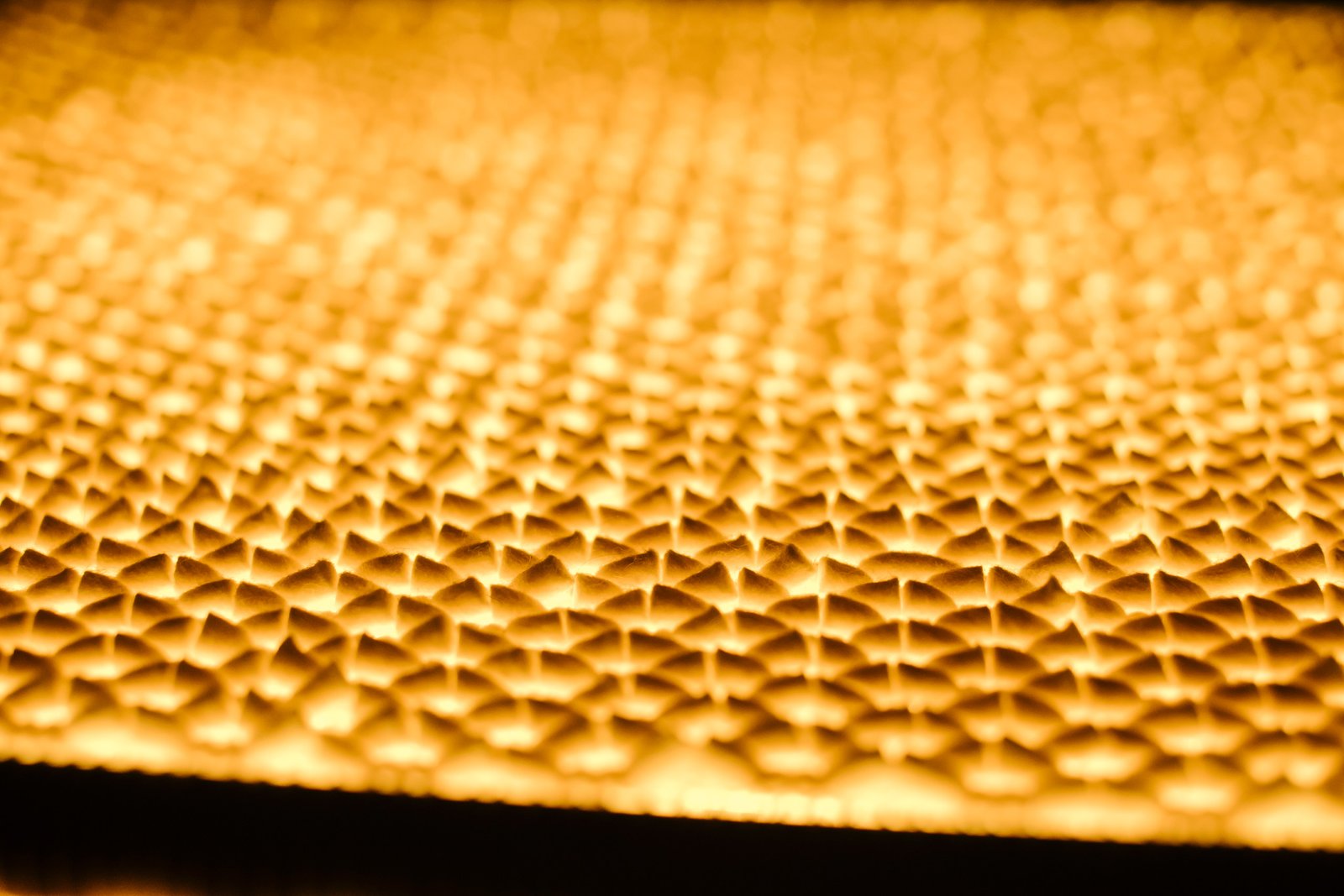
Cobijo is a piece developed with designers Damián López and Irene Corbacho of the interior design studio Leblume, within the ADA project of the Faculty of Fine Arts of Granada, through a process of experimentation and co-creation between design and contemporary craftsmanship.
It is a suspended acoustic ceiling with sound-absorbing and lighting functions. From this functional and sensory approach, we studied different weave structures and selected two complex textiles with distinct textures on their upper and lower surfaces.
An LED lighting system controlled by Arduino was incorporated to provide the lighting function.
Its sound-absorbing properties improve listening conditions and help create a more comfortable atmosphere, while the rhythm of the Arduino-controlled LED lights invites a sense of stillness.
The result is a sculptural piece that generates light: a sound and sensory refuge that engages with ideas of rest, listening and contemplation.
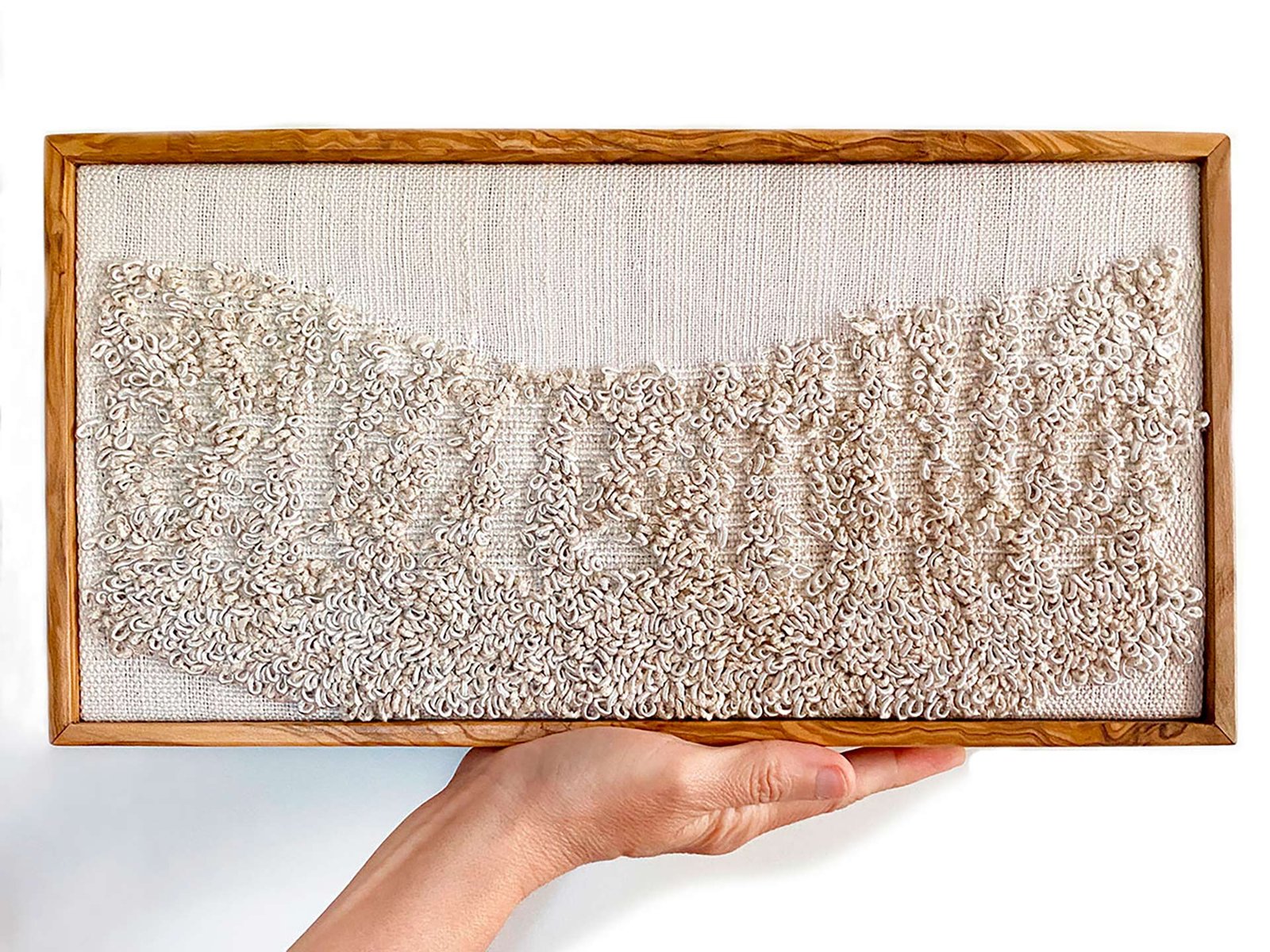
Developed with craftsman Juan Molina and his studio El Arte del Olivo, these pieces incorporate olive-wood boxes designed and made to support the textiles and complete their presence within the space.
Horizons reflects on the different solutions or realities that may emerge from the same situation, depending on the position or perspective from which it is viewed. Seeds, from another perspective, is presented as an allegory of latency and the possibility of change as a means of moving forward.
The result is a body of work in which textile and wood enter into dialogue, and where materiality and meaning reinforce one another, extending the presence of textile within the field of artistic wall work. Horizons
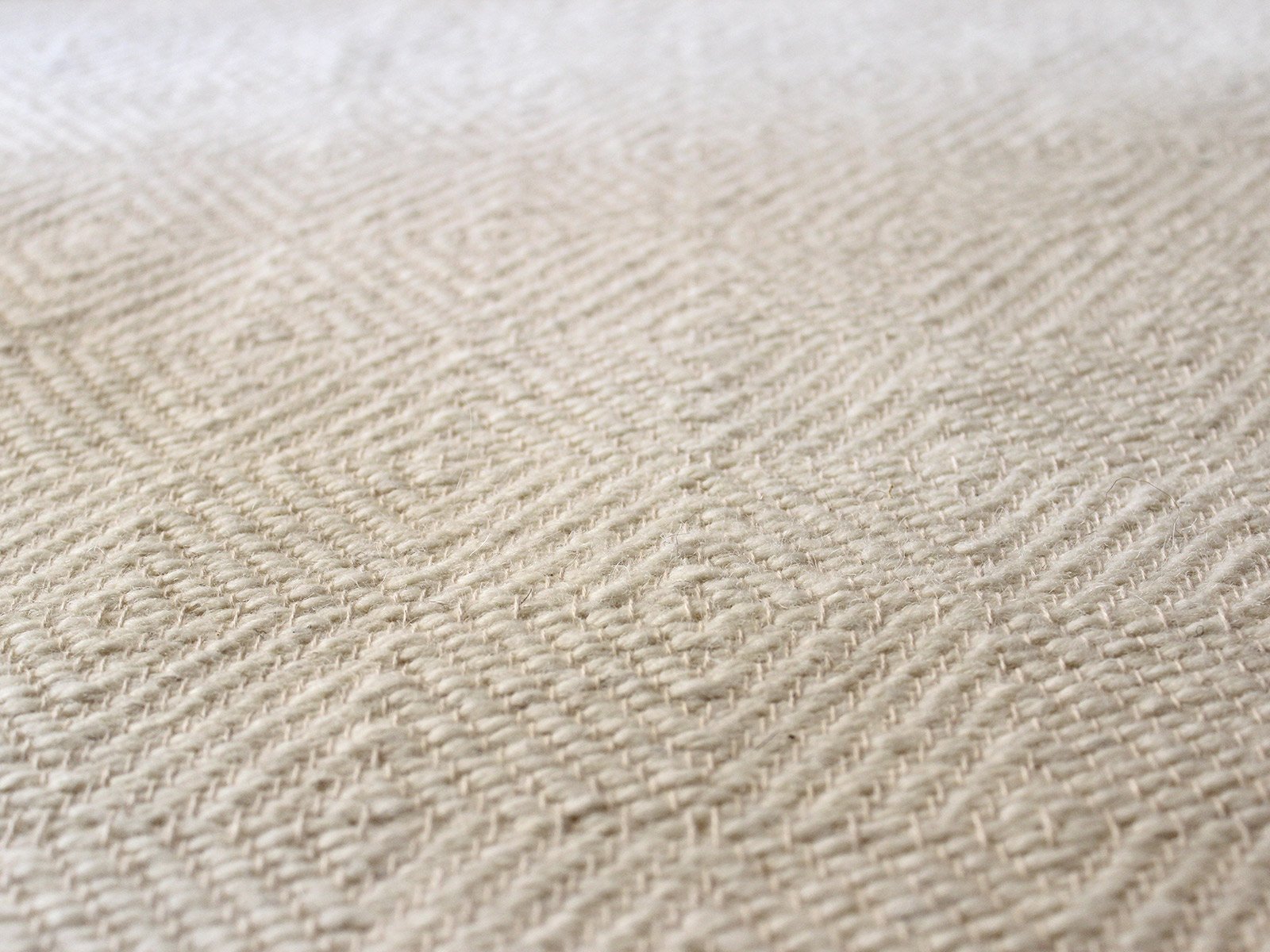
For several rooms at La Bobadilla hotel, we developed a series of rugs with personalised geometric designs, conceived to complement the interiors through restraint, materiality and visual harmony.
Woven in natural wool and finished with organic cotton tape, they were produced in different sizes according to the requirements of each space.
The largest pieces were hand-stitched with invisible seams, seeking an impeccable finish and a warm, serene presence fully integrated with the existing furniture.
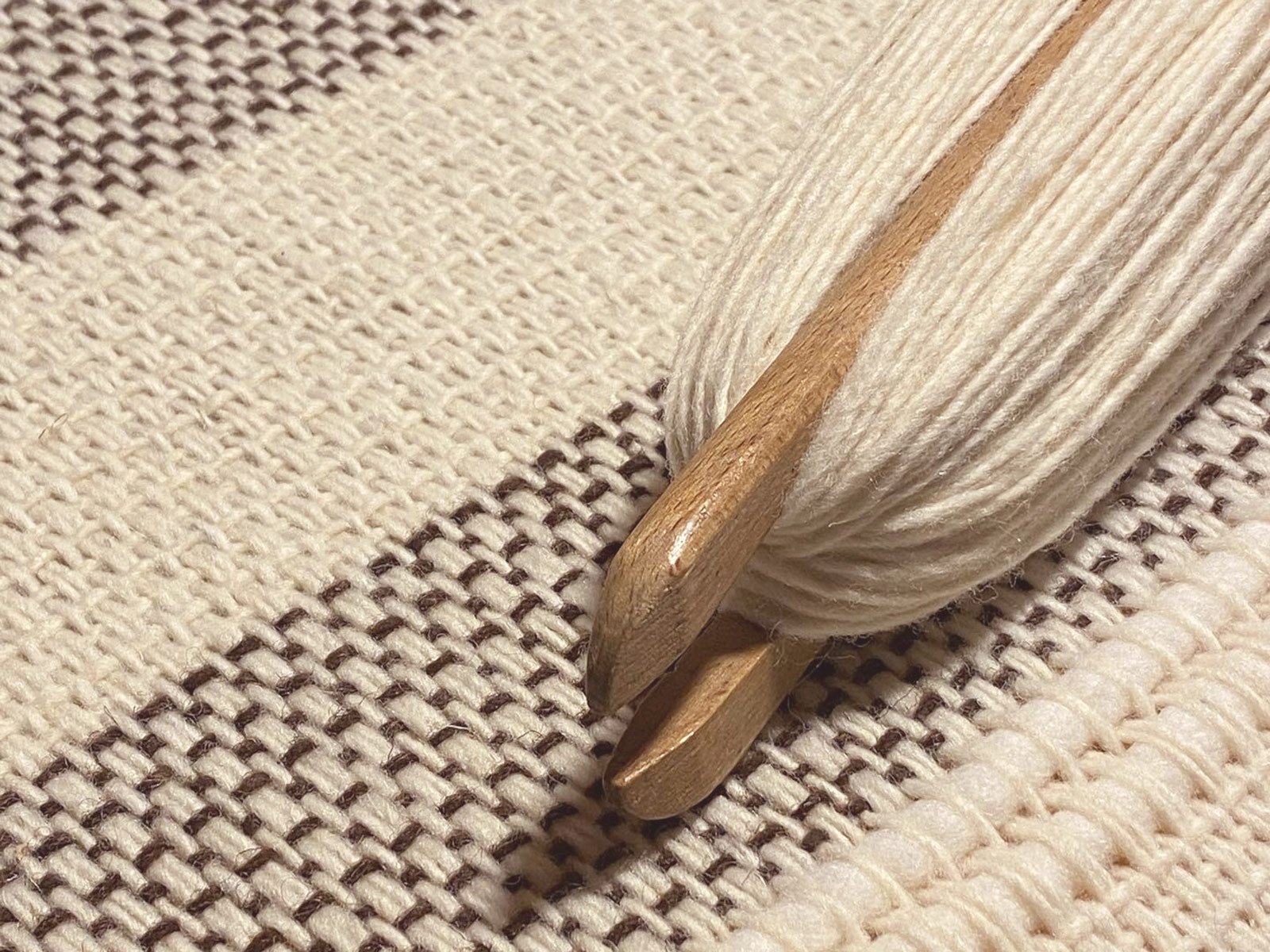
For this series of ten blankets, we worked with the designer on the textile development of each piece, defining every aspect from the type of wool, density and drape to the finishing details.
Using a palette of two natural tones, brown and white, the designer created a different arrangement of stripes and proportions for each blanket, incorporating a textured felted-wool cord in varying positions.
The result was a collection of ten personalised pieces, each with its own identity, designed for the home with close attention to the original concept and to the desired fibre and design characteristics.
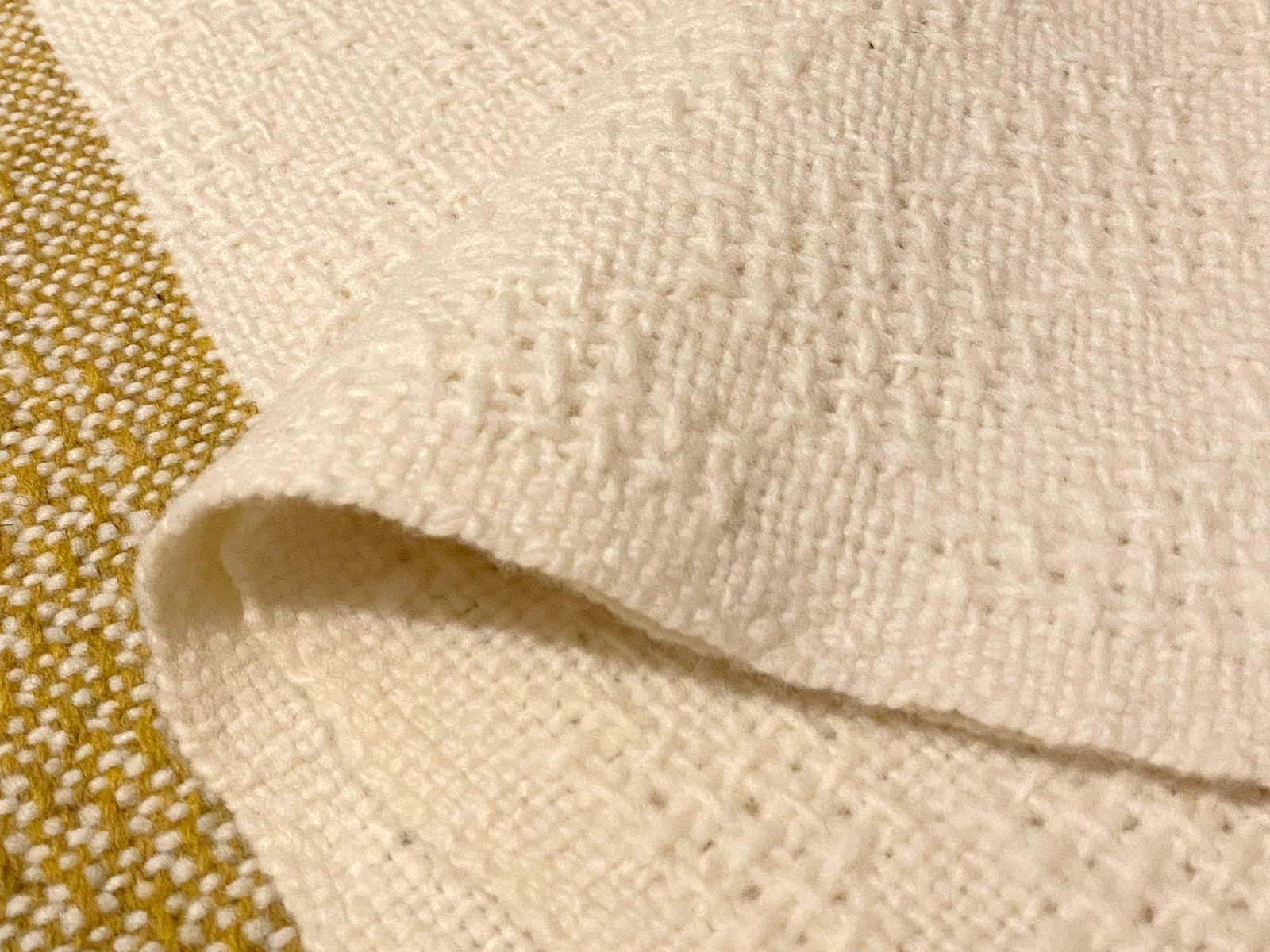
For Soho House, we developed several finished blanket prototypes in different sizes, together with two tapestries conceived for a new hotel project.
Starting from the defined use, colour and format, we proposed the fibres, weave structures and finishes, shaping a group of pieces designed to integrate into the space through the selected materials and textures.
In this section, we bring together textile developments related to production, series and samples, where the craft adapts to different professional needs and projects.
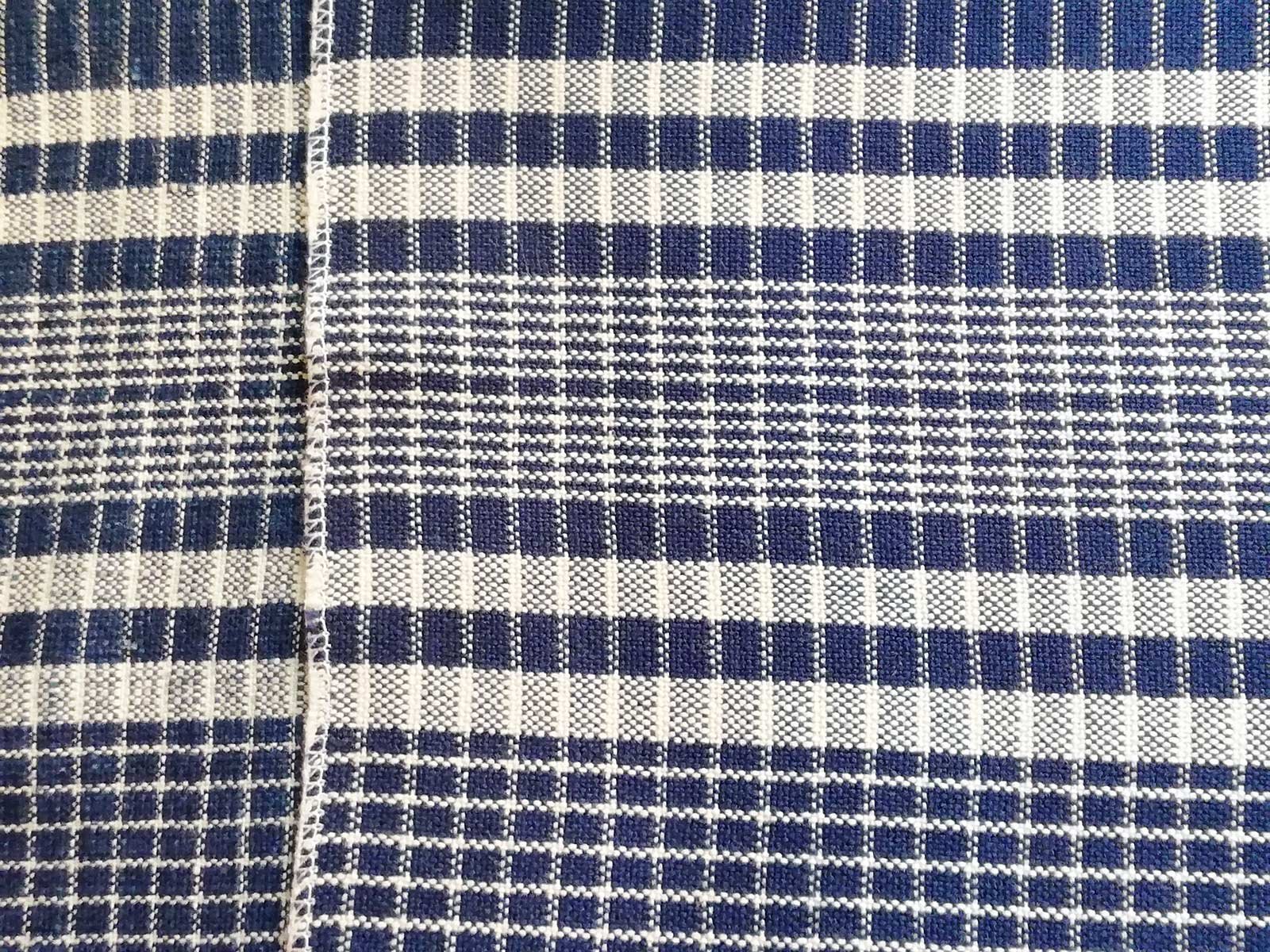
For the Lola Torres Association, we developed a length of fabric to reproduce the skirts and aprons of its regional costume, preserving the structure and pattern of the original textile.
Woven in cotton in a restrained combination of blue and white, the project required a detailed study of densities and yarn thicknesses in order to achieve an accurate ethnographic reproduction, respecting the white checked pattern and the characteristic bands of the aprons.
It was essential to reproduce the same texture, density and drape so that the finished skirts would have the same movement and retain the distinctive identity of this traditional dress. The newly woven textile appears on the right-hand side of the image.
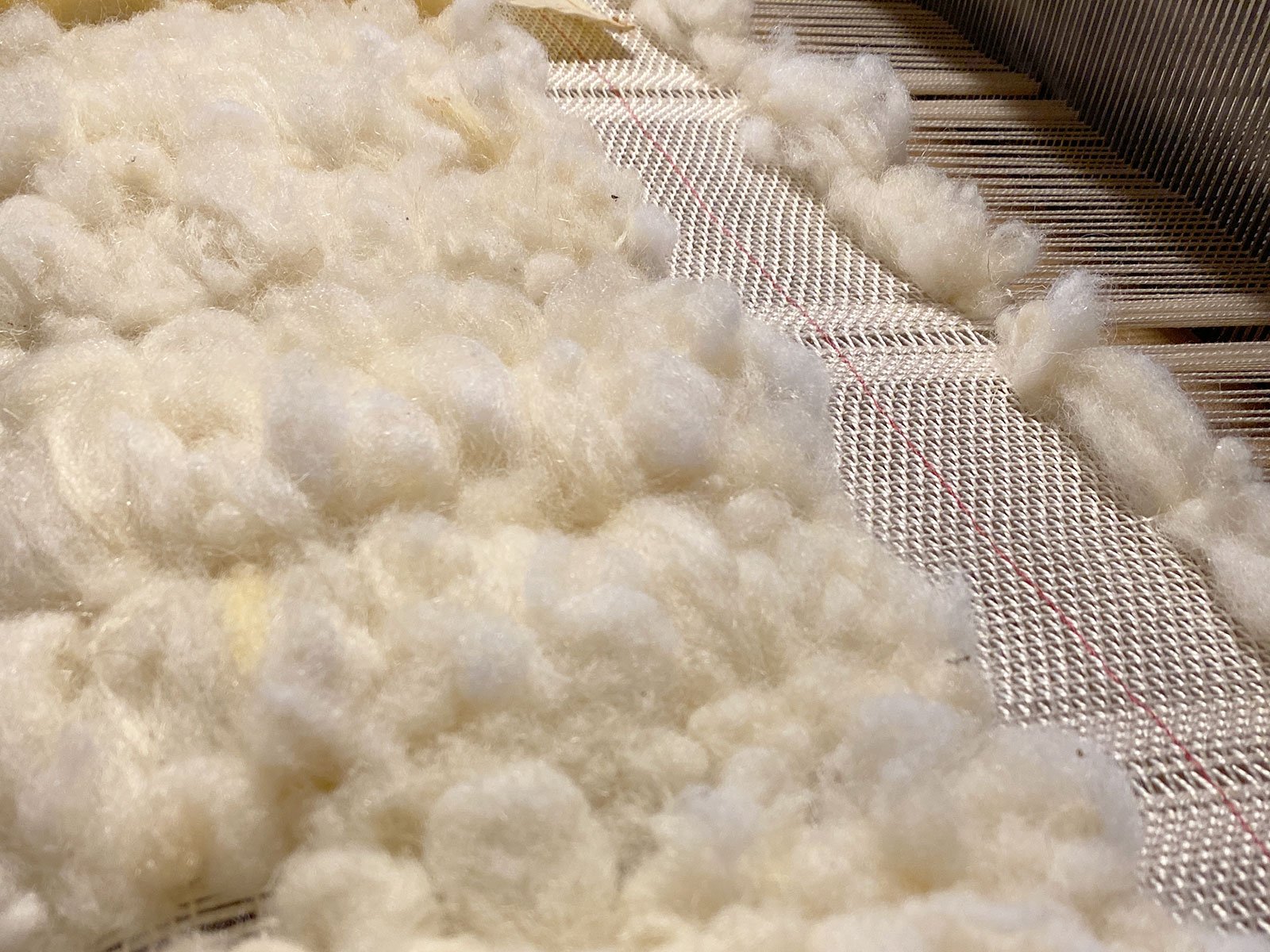
For Vida Trashumante, we developed a textile from the ground up to dress its bottle of organic olive oil, beginning with one very specific idea: to evoke the fleece of a sheep both visually and through touch.
With full responsibility for the textile solution, we designed the structure and weaving drafts to create a highly textured surface, handwoven with washed natural wool that had not been carded, combed or spun.
The result was a piece with its own identity, La Oveja, in which the textile became part of the bottle design for the company’s organic olive oil, bringing together design, agriculture, livestock farming and craftsmanship in a symbolic and evocative object.
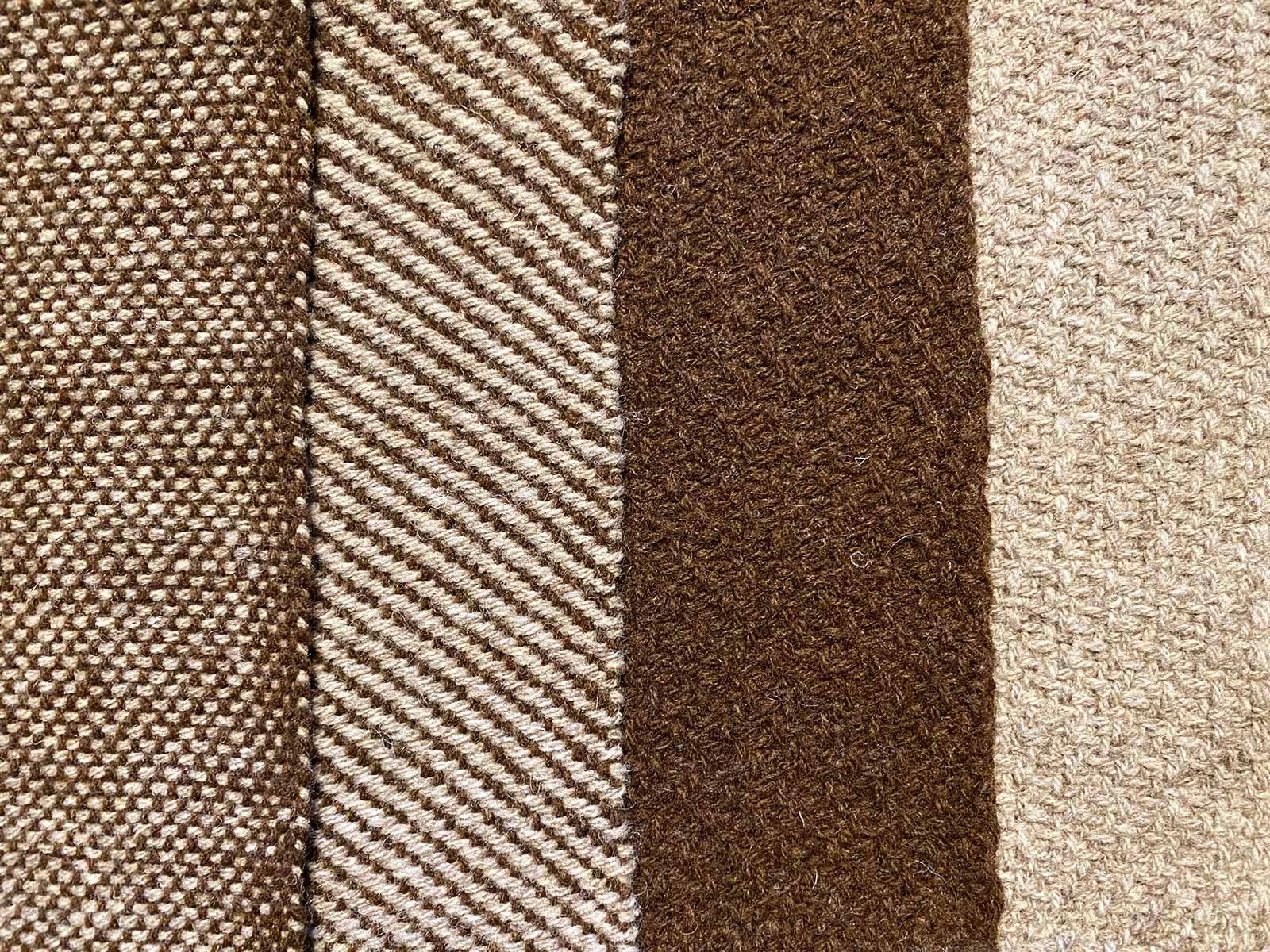
Using the wool supplied for the project and a single intended use —the development of a blanket collection— we produced a series of textile samples focused on studying the fibre and exploring its possibilities within the weave.
From this starting point, we proposed several textiles with different structures, densities and behaviours, showing how the same material can lead to very different final fabrics even when the intended use remains the same.
Each sample presented a different possibility in terms of design, texture and handle, helping to define the final character of the collection with greater precision.
We use first-party and third-party cookies for the operation of the website, statistical measurement and, only with your consent, marketing purposes. You can accept, reject or manage your preferences.