In our workshop, every piece is woven with natural fibers. Together with the quality of the finishes, this makes them easier to care for in everyday use. With just a few simple care gestures, they will keep their appearance, texture and beauty for years.
Below you will find a quick and simple care and maintenance guide, followed by more detailed recommendations by type of piece and type of fiber.
Before going into detail, here is a guide with general recommendations that are simple to follow.
As a quiet luxury craft brand, we take care of every stage our pieces and textiles go through, from the selection of fibers to the finishing, so that the final quality supports their maintenance and durability.
All our textiles and pieces are hand washed, confirming their quality and ease of care. Except for specific pieces that may be difficult to handle because of their size, they can be hand washed with mild detergent in cold water, dried vertically and ironed or steamed.
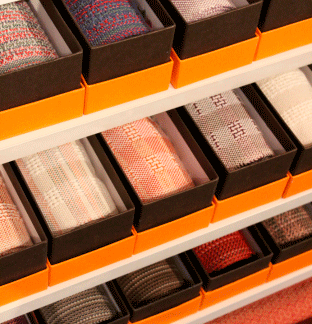
You can also store them rolled in the boxes or cotton bags in which you receive them, to keep them impeccable.
Our scarves, neck warmers and shawls are delivered already hand washed and settled, so you can care for them at home with complete peace of mind, preserving their drape, appearance and touch.
Hand wash with mild detergent and cold water. Handle gently and rinse well.
Remove excess water by pressing the piece without wringing. Wrap a towel around the clothesline and secure it with two pegs, then hang the piece vertically over the towel to avoid marks and make ironing easier if desired. Dry in the shade with natural ventilation.
You can iron and/or steam. Adjust the iron temperature according to the type of fiber; if it is a blend, choose the lowest temperature.
If you need to arrange them, comb gently with a wide-tooth comb.
Store your piece rolled in its box or organic cotton bag. Always clean and completely dry.
Our cushions and blankets are delivered hand washed and settled. They only need gentle care to preserve their appearance and softness. Their maintenance is practically the same as for scarves, neck warmers and shawls, with the difference that airing is often enough, without the need for frequent washing.
Air from time to time and shake gently to release surface dust. When needed, hand wash with mild detergent and cold water.
Remove excess water by pressing the piece without wringing. Wrap a towel around the clothesline and secure it with two pegs, then hang the piece vertically over the towel to avoid marks and make ironing easier if desired. Dry in the shade with natural ventilation.
You can iron and/or steam. Adjust the iron temperature according to the type of fiber; if it is a blend, choose the lowest temperature.
If you need to arrange them, comb gently with a wide-tooth comb.
Store your piece folded in its organic cotton bag. Always clean and completely dry.
Rugs and poufs require the same care as blankets and cushions, except for larger rugs, which we recommend taking to a specialised dry cleaner, and cotton poufs, which can be machine washed.
Rugs can be vacuumed or shaken to release dust. To wash them, do so by hand with mild detergent and cold water. Cotton poufs can be machine washed using programmes that do not crease. Large rugs can be washed, but they become heavy when wet, so it is better to take them to a specialised dry cleaner.
Remove excess water by pressing the piece without wringing. Wrap a towel around the clothesline and secure it with two pegs, then hang the piece vertically over the towel to avoid marks and make ironing easier. Dry in the shade with natural ventilation.
You can iron and/or steam. Adjust the iron temperature according to the type of fiber; if it is a blend, choose the lowest temperature.
If you need to arrange them, comb gently with a wide-tooth comb.
Store your piece rolled in its organic cotton bag. Always clean and completely dry.
Like most of our pieces, they are easy to care for and maintain. Both the booties and the blankets are delivered already hand washed and settled, so you can care for them at home easily while preserving their appearance and touch.
Hand wash when needed with mild detergent and cold water. Handle gently and rinse well.
Remove excess water by pressing the piece without wringing. Wrap a towel around the clothesline and secure it with two pegs, then hang the piece vertically over the towel to avoid marks and make ironing easier if desired. The booties can be placed on a surface or held on the line with a peg. Dry in the shade with natural ventilation.
You can iron and/or steam. Adjust the iron temperature according to the type of fiber; if it is a blend, choose the lowest temperature.
Store your piece rolled in its box or organic cotton bag. Always clean and completely dry.
Our individual placemats are easy to care for and can be machine washed. Practical and versatile, they remain impeccable for a long time.
You can hand wash them with mild detergent and cold or lukewarm water, and also machine wash them with cold or lukewarm water, preferably using programmes that do not crease.
If you have hand washed the piece, remove excess water and hang it with two pegs. Smooth it with your hand to help reduce any creases, if you prefer, and to make ironing easier. Dry in the shade with natural ventilation.
You can iron and/or steam. Adjust the iron temperature according to the type of fiber; if it is a blend, choose the lowest temperature.
Store your piece rolled in its organic cotton bag. Always clean and completely dry.
Wall pieces do not need to be washed. With these recommendations, you can keep them impeccable, preserving their appearance and beauty indefinitely.
Avoid direct sunlight, especially on dyed fibers within the work. Avoid humidity and sources of heat.
Wall pieces can be vacuumed gently on a regular basis, using moderate power and no aggressive brush attachments.
From time to time, you can give the piece a gentle steam without ironing, without flattening the textile, to revitalise the fibers.
If you need to store your piece, use a breathable fabric, for example cotton (a sheet), to cover it completely, and store it vertically without placing weight on it.
Broadly speaking, we can group fibers into three categories: animal origin, plant origin and a third category for silk. Care may vary depending on the type of fiber. This guide helps you care for the fibers in your pieces and keep them looking as they did on the first day for a long time.
Washing: hand wash in cold water with mild soap. Do not use fabric softener or hot water. Do not rub, so that the wool does not felt with water and friction.
Ironing/steam: select the wool setting. Medium/high temperature. Sometimes steaming alone is enough.
Washing: hand wash in cold water with mild soap. Do not use fabric softener. Do not use hot water or rub, to avoid forcing the fibers of the pieces.
Ironing/steam: select the wool setting. Medium temperature with moderate steam. A gentle steam works well.
Washing: hand wash in cold water with mild soap. Do not use fabric softener, hot water or rubbing, so as not to damage its pile and appearance.
Ironing/steam: steam is preferable; it looks good without ironing. If needed, use a very low temperature.
Washing: hand wash in cold water with mild soap. Do not use fabric softener. Do not use hot water or rub.
Ironing/steam: medium temperature with steam, without pressing too much. Sometimes steaming alone is enough.
Washing: hand wash in cold water with mild soap. It tolerates fabric softener, machine washing and hot water.
Ironing/steam: medium to high temperature with steam, even moistening more marked creases or wrinkles.
Washing: hand wash in cold water with mild soap. It tolerates fabric softener and machine washing.
Ironing/steam: high or medium temperature with steam. One useful tip is to iron the piece while damp to remove marked creases more easily if you do not like them.
Washing: hand wash in cold water with mild soap.
Ironing/steam: medium temperature with medium steam.
Washing: hand wash in cold water with mild soap.
Ironing/steam: low to medium temperature with gentle steam.
Washing: hand wash in cold water with mild soap.
Ironing/steam: always follow the recommendations for the most delicate fiber. For example, with cotton and silk, choose the silk ironing setting.
We use first-party and third-party cookies for the operation of the website, statistical measurement and, only with your consent, marketing purposes. You can accept, reject or manage your preferences.