Our way of weaving respects the most authentic meaning of this craft and clearly distinguishes it from industrial weaving. We work by hand on non-mechanised low-warp looms.
What does this mean? It means that the loom and the tools we use are operated directly by our hands and feet, not by motors or built-in automated systems. We emphasise this point because, although it may seem obvious, it is sometimes overlooked. Handweaving means that a person operates the loom for every single pick. Without that person, it simply is not handwoven.
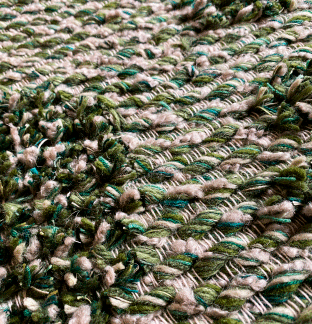
Over the years, we have developed our own methodology covering the entire process: design, loom preparation, weaving and finishing. We specialise in weaving exclusively with excellent-quality natural fibres such as cotton, ramie, hemp, bamboo, soya, jute, wool, mohair, alpaca and silk, with particular emphasis on certified organic fibres and recycled natural fibres.
Our knowledge of textile structures and the behaviour of natural fibres allows us to control their appearance, drape, texture, density and durability. This enables us to create pieces of exceptional quality, from the simplest textiles to the most complex.
These are the main characteristics and finishes of the textiles we handweave on our looms. They distinguish our work and add value to each piece, so that you can use and enjoy it for a long time.
You can explore them one by one: Original designs · Woven on artisan looms · Selvedges · Continuous fibre · Hemstitching at the ends · Fringes or hems · Hand finishing · Cutting and sewing · Washed and pressed
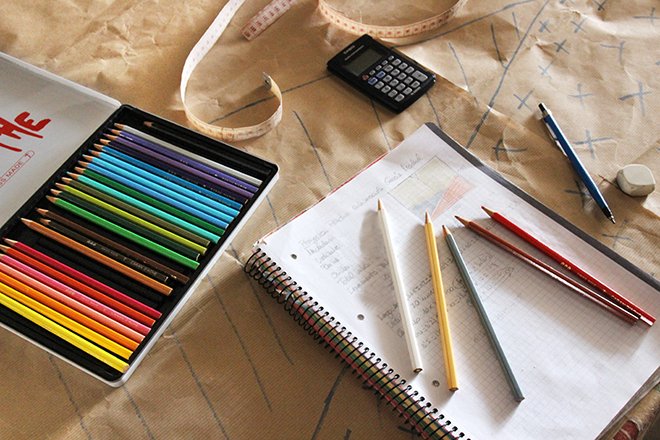
We design these unique pieces inspired by everything around us: nature, sensations, music, colours and textures. This craft allows us to develop our creativity by weaving a wide variety of pieces and combining different patterns, densities, textures, fibres and dimensions. We can also produce textiles based on your own design, whether you are a private individual or a professional, through a personalised consultation.
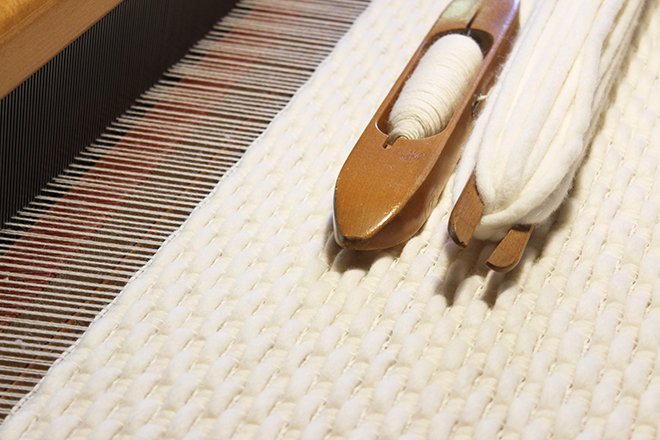
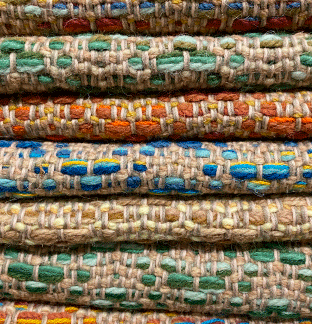
We handweave each piece on manual wooden artisan looms, without mechanisation, operated by our hands and feet. Every stage is carried out by us; no part of the production is subcontracted.
Because neither our looms nor any other stage of the artisan weaving process is mechanised, our production capacity is naturally limited. At the same time, this allows us to create an almost endless variety of textures, shapes and combinations, which we continually renew through new creations.
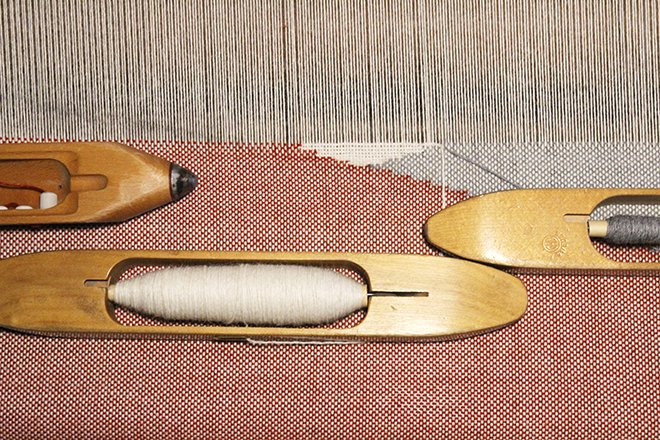
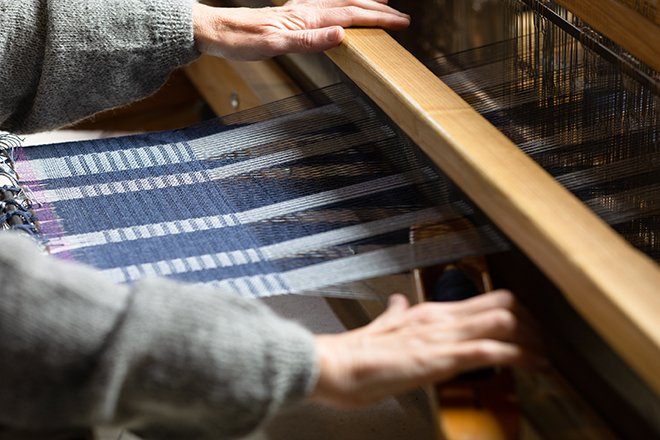
Each piece has two selvedges and is woven in one continuous process, with no cut or trimmed edges. This can be checked by looking closely at the sides. If you see a zigzag stitch running along the edge, usually made with a very fine thread over cut yarns, it is an unmistakable sign of mechanised or industrial production, where the full width is woven first and the individual pieces are then cut from it.
Our pieces have carefully formed selvedges that are denser than the rest of the fabric. They extend the life of the piece and give it an impeccable finish. They are a clear sign that each piece has been handwoven individually on the loom.
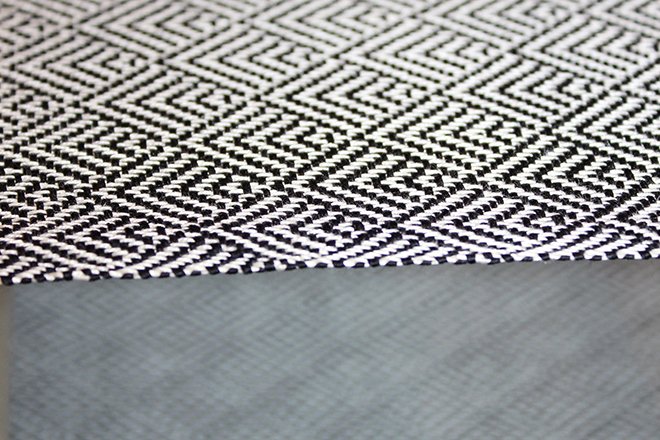

Our pieces contain no knots or joins within the fabric. Everything is concealed in the selvedges with a hand stitch similar to darning. Once again, this creates a better finish and makes the piece more durable.

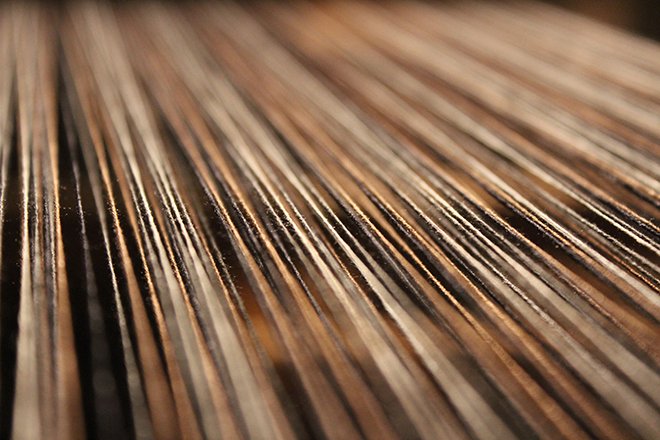
On every piece, we sew small stitches by hand at the beginning and end, working across the first and second threads in a way similar to hemstitching. This prevents the fabric from gradually shifting towards the fringe after repeated washing. Some pieces with short fringes may include a different drawn-thread stitch, which secures the first threads and gives the short fringe an impeccable finish. Both are delicate stitches made with a needle while the piece is still on the loom. As always, they improve the finish and quality while also enhancing the beauty of the completed piece.


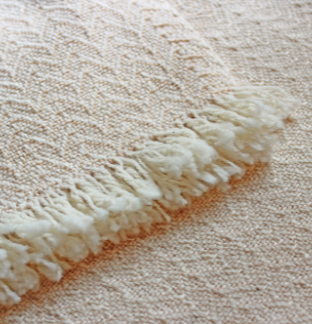
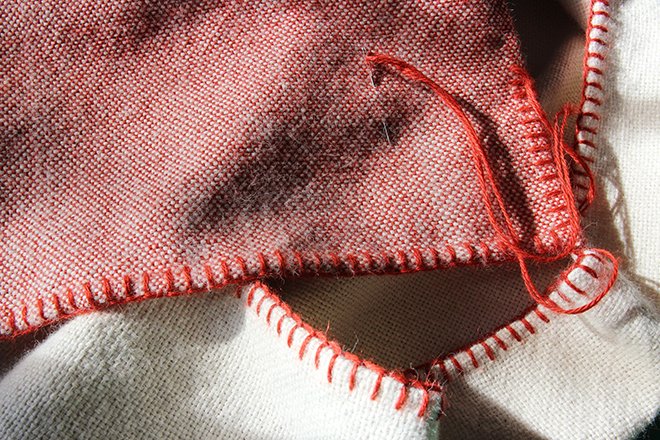
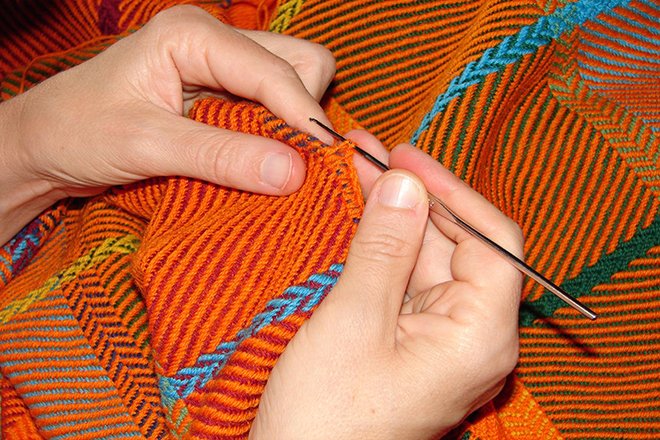
Once a piece comes off the loom, it has two edges that we finish either with fringes or with a hem. The fringes may be twisted, knotted, finished with macramé or crochet, braided or cut. For hems, we reinforce the fabric with overlocking and always sew them by hand.
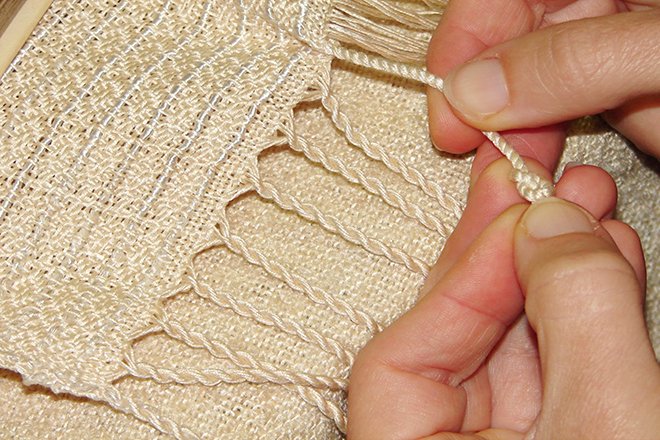
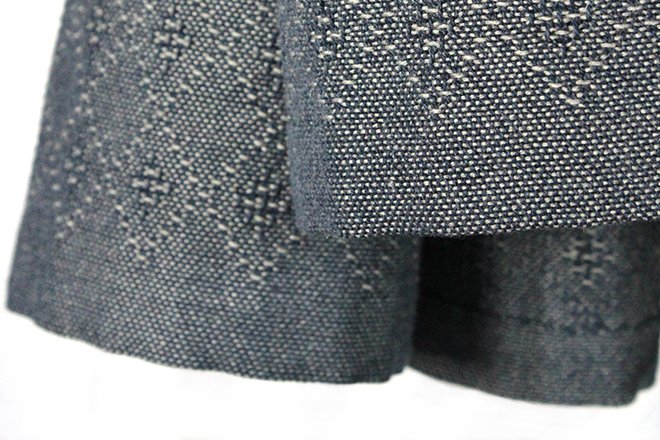
Some of our pieces include hand finishing to reinforce the hem or the selvedges, either around the entire piece or along the sides without fringes. On pieces such as ponchos, blankets and tablecloths, we add crochet work or decorative needle stitching that also enhances the final appearance of each piece.
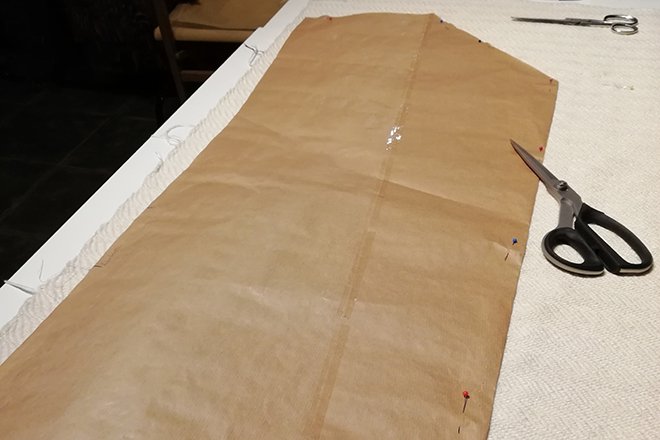
Some of the textiles woven in our workshop are also made into finished products for different uses, including garments and fashion accessories, as well as home textiles and accessories. These include jackets, kimonos, bags, baby shoes, cushions, pouffes, curtains and tablecloths. Depending on the design and finishing requirements of each piece, we cut and sew both by machine and by hand in our own workshop.
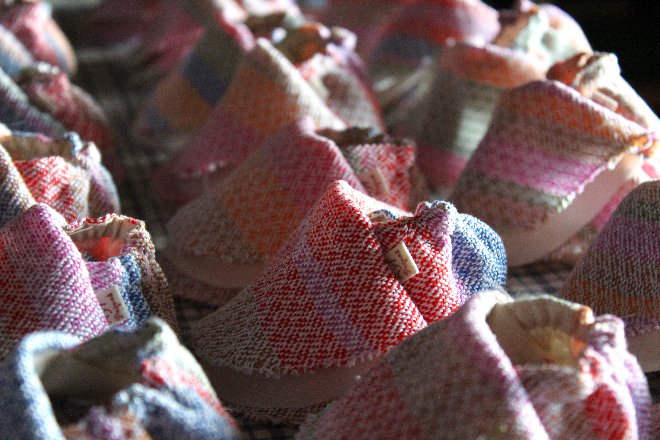
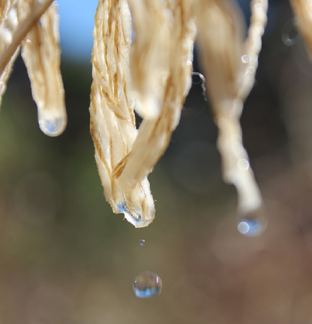
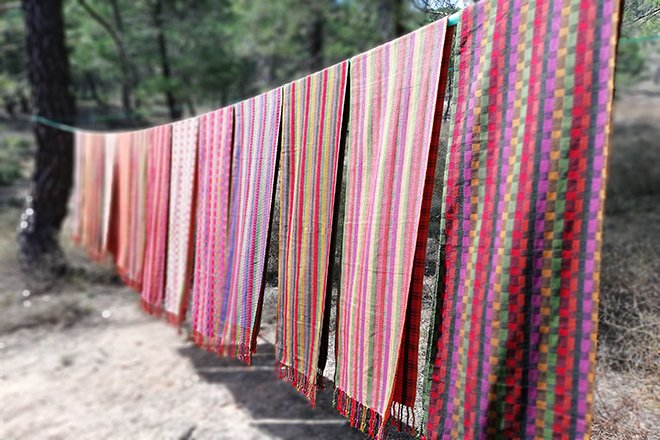
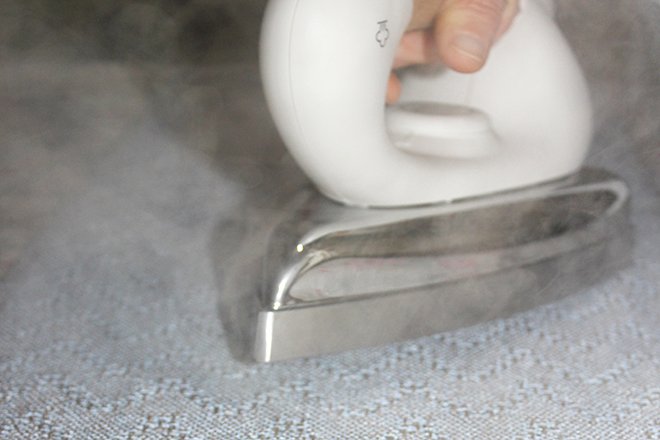
Once again, this process is carried out by hand, always using a mild detergent and cold water. Although this can slow production, it is essential so that we can provide the final measurements, as all handwoven textiles shrink during their first wash. At the same time, we check the quality of the fibres and, where applicable, the quality of the dye, while increasing the final softness of the fabric.
We use first-party and third-party cookies for the operation of the website, statistical measurement and, only with your consent, marketing purposes. You can accept, reject or manage your preferences.